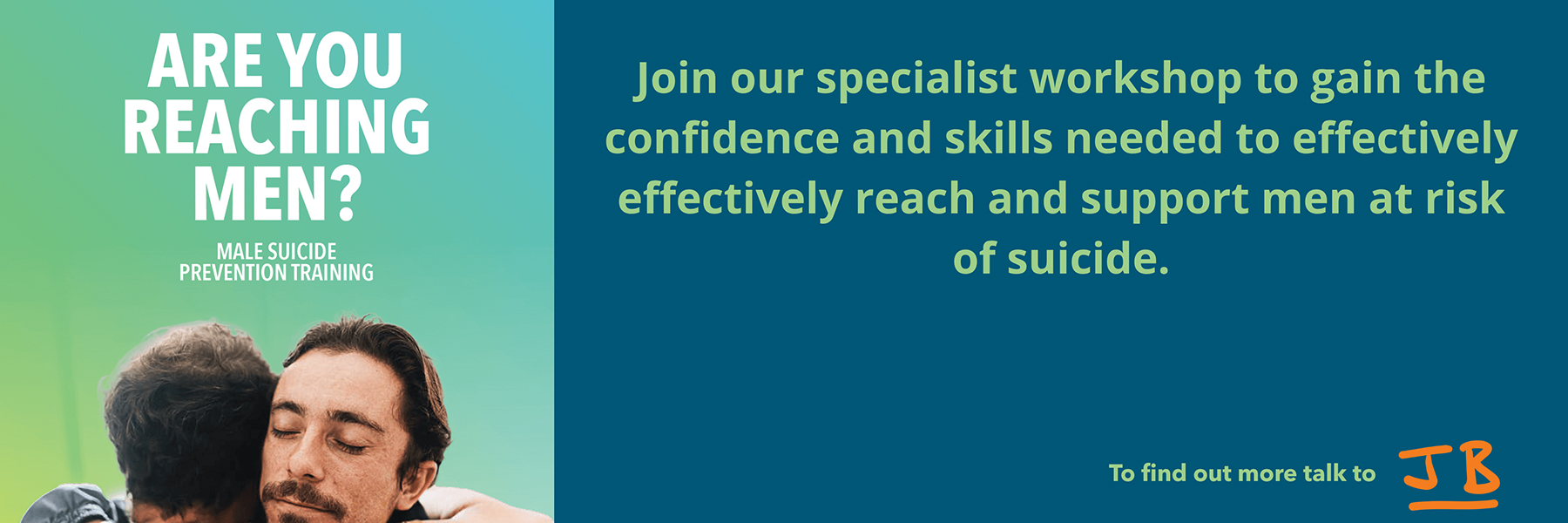
Men account for 3 in 4 suicides, yet our research finds that in many services, up to 4 in 5 people who access suicide prevention services are female.
As a sector, we need to get better at Reaching Men.
Reaching men training will help you to:
-
Expand your understanding of male suicide
-
Explore the principles of male-friendly services
-
Strengthen your capacity to engage with men at risk of suicide
-
Reflect on the changes we can make as a sector to prevent male suicide
-
Make a plan to apply your learning after the workshop
What to expect?
-
Supportive learning environment
-
Group setting
-
Interactive sessions
-
Experienced facilitators
-
3 to 4 hours long
Who should attend?
-
Community Workers
-
Social Workers
-
Healthcare Professionals
-
Volunteers and Peer Workers
-
People working with men at risk
-
And the people that lead, support or,
market the above workers and their programs.
More about why we need this training:
The National Suicide Prevention Strategy calls for tailored training for populations disproportionately impacted by suicide.
Unlike most suicide prevention training, Reaching Men focuses entirely on the benefits of taking a gendered approach to suicide prevention.
While every suicide is individual and unique, there are gendered patterns in the pathways that can lead men and women to suicide.
Deepening our understanding of the role that sex differences, gender norms and masculinity play in suicide risk, can help us become more effective at reaching and engaging with men.
Clearly, there is no one-size-fits-all approach to male suicide prevention. There are differences between groups of men, as well as differences within individual men that need to be considered.
In developing Reaching Men, we have drawn on the cumulative knowledge and wisdom of the men's health sector, which has a long history of engaging with men and boys in all their diversity. Reaching Men makes that knowledge accessible to anyone wishing to build their capacity to work with men.
About the trainer:
Jonathan Bedloe (JB) has been involved with AMHF for over 12 years, with involvement including board membership and more recently consulting to AMHF for various initiatives. JB works for himself as a Mental Health First Aid trainer, suicide intervention skills trainer, and facilitation provider and trainer. JB is also the founder and current CEO of Men's Resources Tasmania.
