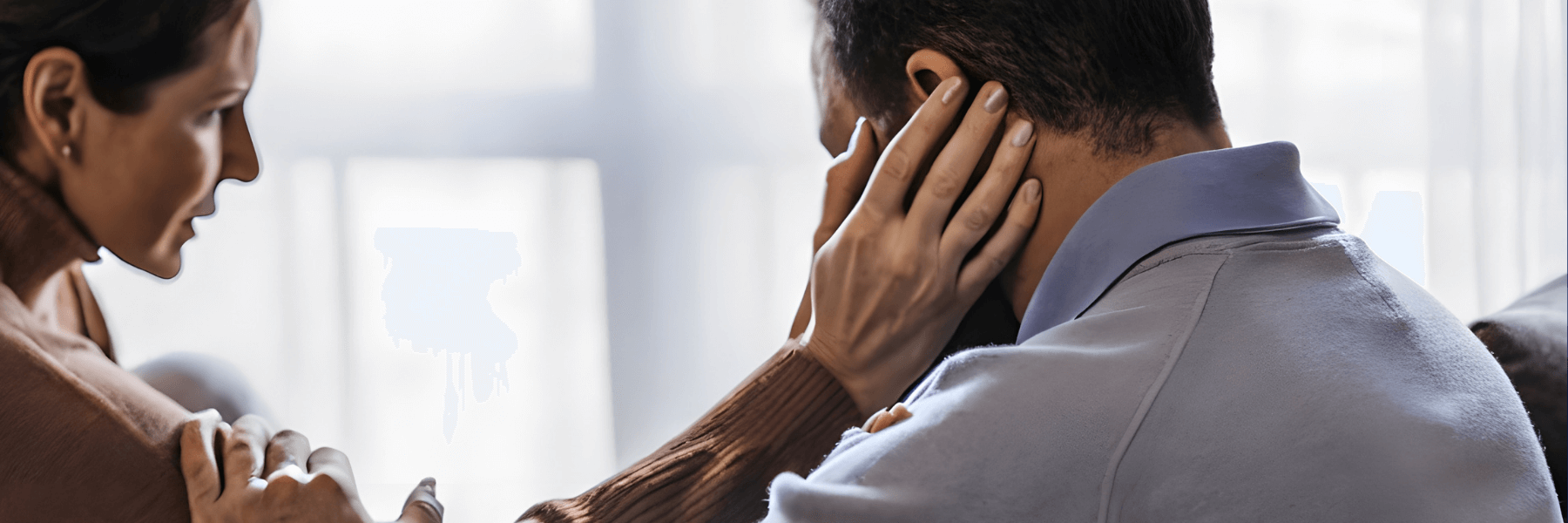
Canberra event tackles male survivors, suicide, and violence
Earlier this month, AMHF attended a Round Table event in Canberra on the links between Child Sexual Abuse (CSA), Suicidality and Violence, hosted by one of our member organisations, the Survivors & Mates Support Network (SAMSN).
SAMSN is a specialist service that works specifically with male victims/survivors of CSA, while taking an inclusive approach by advocating for better support for all survivors. SAMSN is working in partnership with the Disrupting Violence Beacon at Griffith University, as part of a research project led by Professor Patrick O'Leary, which aims to deepen understanding of survivors' experiences of suicidality, coping strategies, and relationships.
A horror hidden in plain sight
During the day, SAMSN CEO Craig Hughes-Cashmore quoted his colleague, Dr Gary Foster, by explaining that one of the roles of survivor organisations is to hold space for both horror and hope in equal measure.
The horrific scale of childhood sexual abuse in Australia is far greater than most people realise. According to Professor O'Leary, an estimated four million women and two million men experienced sexual abuse as children.
Prue Gregory OAM, SAMSN's Policy, Advocacy and Stakeholder Relations Manager, has helped train hundreds of frontline workers on engaging with male survivors. She highlighted two common themes that emerge from these sessions.
The first is that most professionals and practitioners say they lack the confidence to deal with men who disclose a history of CSA. The second is that most frontline workers are shocked to learn about the scale of the problem when they discover that 1 in 5 men they work with could be survivors of CSA.
A leading cause of male suicide
While CSA has negative impacts on all survivors, there are several gendered differences, including higher rates of suicidality and suicide among male survivors.
According to data from the Australian Institute for Health and Welfare, around 1 in 4 people who die by suicide have a history of childhood abuse and neglect. In 2018, there were more than 800 suicides linked to childhood abuse and neglect; nearly 70% of those were men (551 male suicides and 254 female suicides).
Research by Professor O'Leary has found that the risk of suicidality in male survivors is 10 times higher than in the general public. Male survivors can be at risk of suicide throughout adulthood, and this risk can be triggered by key events such as when they become parents or if they are reminded of their abuser (e.g., when a high-profile perpetrator appears in the media).
Rachel Hart, SAMSN's Senior Practitioner, confirmed the link between CSA and male suicide, saying that 70% of the men accessing their peer support groups report having suicidal thoughts and feelings, and 47% report having suicidal behaviours.
Mental health approaches aren't enough
A common theme of the day was that while CSA is linked to a greater risk of mental health disorders, relying on mental health services to respond to survivors' needs isn't working.
This was summed up in the idea popularised by Dr Bruce Perry, who says that mental health tends to ask, "what's wrong with you?", when the appropriate response to trauma is to ask, "what happened to you?".
SAMSN's Patron, Robert Fitzgerald AM, served on the Royal Commission into Institutional Responses to Child Sexual Abuse for five years.
He said that one of the dangers is that the current system tries to make people access support and enter the system through a particular lens (i.e., a mental health diagnosis).
According to Mr Fitzgerald, most survivors the Commission spoke to had already accessed many counsellors. They shared horror stories of the inappropriateness of the sessions and the treatment programs offered.
Survivors who accessed specialist peer-led services like SAMSN told a different story. They found an organisation with instant understanding and acceptance. Professor Judy Cashmore AO agreed with Mr Fitzgerald. She said: "We need to design a service system that fits the people who use it, not the other way around."
Survivors are dying in the funding gap
Another key takeaway from the day was that the current system focuses far more on prevention than response. No one present wished to see a reduction in work to prevent CSA, but there was a broad agreement that support services for survivors were inadequately funded.
Craig Hughes-Cashmore said he could not understand why there was concern for survivors of child sexual abuse up until the age of 17 or 18, after which there appeared to be a "compassion deficit". Professor Leah Bromfield, Director of the Australian Centre for Child Protection at the University of South Australia, outlined how gaps in funding put survivors at risk.
The Professor explained that while the Federal Government took on responsibility for funding prevention, States and Territories were expected to respond to victims and survivors. Yet little or no funding is available for this work. She said we need to ensure a proportionate balance in funding between prevention and response; "when we don't, victim-survivors die in the gap."
Are survivors at greater risk of becoming perpetrators?
Professor O'Leary and his colleague from Griffith University, Paul Wyles, highlighted research on the gendered impacts of CSA. In general, female survivors experience more internalising symptoms resulting in a greater risk of depression, anxiety, and alcohol and drug disorders.
In contrast, male survivors tend to display more externalising symptoms such as risky behaviour, aggression, and different forms of violence, including family and domestic violence. While acknowledging the elevated risk, Dr Foster was keen to clarify that the evidence does not back any suggestion that male survivors would automatically become offenders. He estimated that this wasn't an issue in most cases ("19 out of 20").
Professor Bromfield said that male survivors of CSA deserved a therapeutic response because they've been hurt, not because they're potential perpetrators. She said male survivors "really, really get upset about that, understandably, when they feel like the only reason we're focusing on men and boys is because they might become perpetrators".
"If we can hold onto our hope for boys, if we can respond to boys and men who have been hurt, because they deserve to have that hurt responded to, then we'll see a reduction in violence," she said.
The Government's response to survivors
One recurring theme throughout the day was the invisibility of survivors. Prue Gregory OAM said that: "survivors and particularly male survivors have been invisible, and while they remain invisible, we will see them overrepresented in suicide statistics, in admissions to mental health wards and into AOD clinics".
Dr Foster highlighted how the Royal Commission had recommended that CSA should be included in a range of Government policies and strategies. His slide illustrating the lack of progress, particularly in relation to the suicide link, was a standout moment.
Jenna Roberts, Assistant Commissioner at the Domestic, Family and Sexual Violence Commission, responded to this point, saying:
"Child sex abuse is not visible. If it's not in plans, then it's not a priority, then it doesn't go into national partnership agreements around funding with states and territories. So, I think the ability to have visibility and therefore commitment to child sexual abuse and a response to that is something that really needs to change."
A turning point for men and boys
Ms Roberts went on to say that she had seen a significant shift in the willingness to focus on men and boys, both as survivors of violence and perpetrators of violence. The focus included discussions around what does and doesn't work in terms of preventing male violence, and what healing and recovery look like for male survivors.
Earlier in the day, the Assistant Minister for Social Services and the Prevention of Family Violence, Ged Kearney MP, made a similar point in her opening remarks. She said: "It's become obvious to us, to the Minister [for Social Services] Tanya Plibersek and myself, that we need to focus a lot more on men too. We need to work with men. Men are often left out of the conversations around this."
Ms Kearney recently returned from Western Australia, where she spent time with Aboriginal men working in violence prevention.
She said: "The men told us that there's a lot of work we need to do with healing, intergenerational trauma, understanding their experiences and their lives. That's going to be a really important part of tackling sexual abuse and family and domestic violence."
She told attendees: "Your advocacy helps to continue to keep the spotlight on this important issue, and I would really love to work with you on this, particularly in this area of suicide".
NOTE: Craig Hughes-Cashmore is speaking at the National Men's Health Gathering, hosted by AMHF, on 22nd October at the Brisbane Showgrounds. Coming under the Men's Health Research stream, Hughes-Cashmore will lead a discussion on Intersections of male survivors of child sexual abuse with suicidality and violence.
Explore the full program & register today: https://bit.ly/47VO7F9