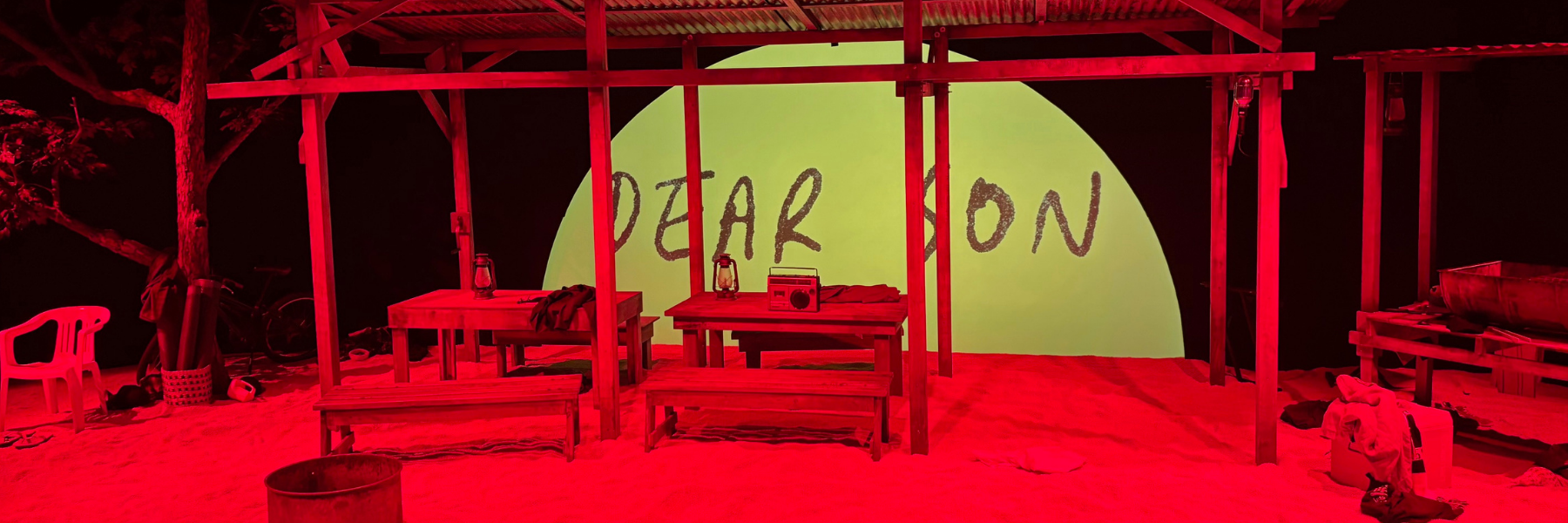
First Nations drama challenges toxic masculinity narrative
“With the strength of our ancestors we pull on the oars of truth against the tides of ignorance and toxic masculinity”. These powerful words bookend a new five man play, Dear Son, based on the book of the same name by Thomas Mayo and produced by Brisbane’s Queensland Theatre.
Mayo’s original publication was a powerful anthology that celebrated First Nations masculinity, through a collection of letters to fathers and sons. In the stage adaptation, these letters are brought to life through the contrivance of an outback men’s group. This is not just a bunch of mates talking shit, it’s a place where men come together to talk straight ... and talk shit.
As men all over Australia who take part in such groups, circles and gatherings know, when we create a safe space to talk, men will dive deep and bare their souls.
On one level, many of the stories shared could belong to men from any community in Australia. There are sons losing fathers and beloved uncles; old men caring for sick wives; brothers caring for each other; men teaching sons to fish; dads dealing with separation; gay dads coming out to their kids.
But then we are reminded, by traditional dancing and First Nation languages and male rites of passage performed out on country, that these stories reflect the shared experiences of Aboriginal and Torres Strait Islander men in particular.
Inevitably, we hear stories of colonisation, racism and stolen children that colour the intergenerational trauma passed from father to son. We also feel the shame inflicted on First Nations men, when they are viewed through the lens of toxic male stereotypes - bludger, molester, paedophile.
From a dramatic viewpoint, the translation of individual monologues into a group dialogue isn’t always convincing. This minor niggle is quickly forgotten when each actor breaks character to declare his own male relationships – father, grandfather, brother, son.
Most poignantly, one player reveals how he had experienced the unconditional love of being a father, but due to miscarriage, is no longer a dad. Here we held our collective breath, as we experienced the raw, authentic emotion of a father’s loss.
One of the play’s underlying messages is that truth-telling allows a person, a people, a country to heal. We were left with a vision of proud First Nations Fathers, recognising their formative influence on their children’s lives and celebrating their role as both warriors and healers.
Tara June Winch's comments on the original book could equally be applied to the stage adaptation:
"Being open, talking up, yarning… this book is about dispelling the stereotype around what masculinity is for First Nations men."