Men’s Health and Wellbeing WA releases fifth edition of popular Blokes’ Book
Men’s Health and Wellbeing Western Australia has released an updated edition of its comprehensive resource on all things men’s health, titled The Blokes’ Book.
Men’s Health and Wellbeing WA is the peak independent not-for-profit charity organisation dedicated to improving the wellbeing of boys and men in Western Australia.
The 52-page fifth edition of The Blokes’ Book is a directory of services pertaining to many key issues impacting its core audience – men and boys – including crisis services, legal support, mental health, physical health, alcohol and drug use, financial services and support, relationships, fathering, self-help and support groups, accommodation services and family and domestic violence.
The Mooditj Mamun book, also produced by Men’s Health and Wellbeing WA, is a directory of services specifically for Indigenous men.
“The Blokes’ Book isn’t just a directory, it’s a resource written by men, for men,” says John Rich, Chair of Men’s Health and Wellbeing WA. “A place where men can find information on how to take that first step, to ask for help or to help a mate.”
The directory includes a contribution from the Australian Men’s Health Forum, a snapshot of How To Help A Mate Doing It Tough, which is a core piece of the Know Your Man Facts campaign.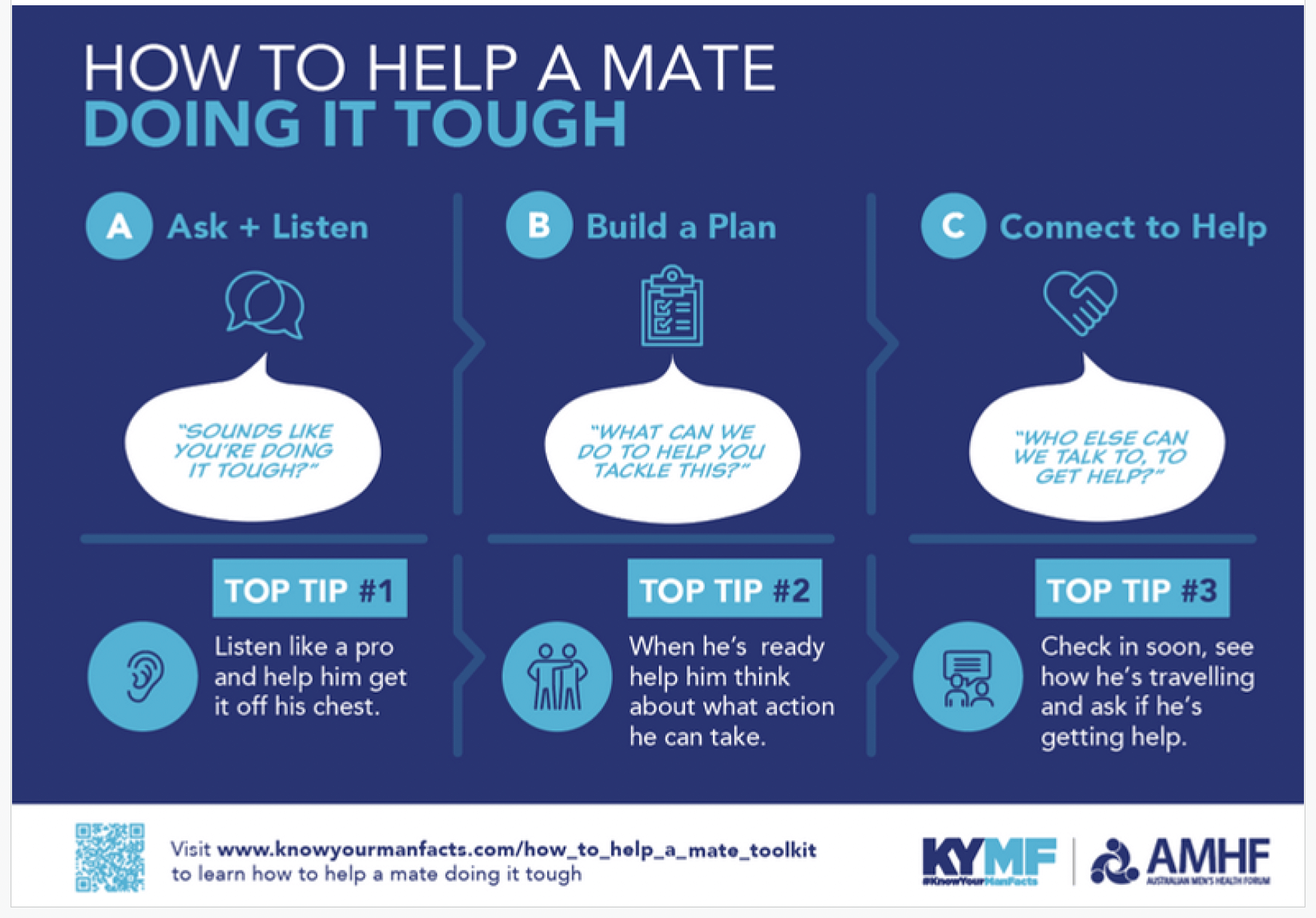
While Men’s Health and Wellbeing WA is state-based, many of the services listed are national, making the book a valuable resource for men and boys Australia-wide. What makes The Blokes’ Book so impactful is its simple lay-out: it discusses different issues, includes facts about each topic and outlines the most pertinent contact numbers and websites to seek assistance.
There are also regular statements from men who have had a positive experience from getting help.
Writes Raj, 42, who was struggling with finances: “I used to tell my mates I was busy when they would ask me out on the weekend. I was too ashamed to tell them that I couldn’t afford to buy food, let alone go out. The first time I got a food hamper was really tough, emotionally, I felt like a failure. But after I took that first step, it became easier to ask for help again. Now I no longer need to get the hampers and I am pretty stoked with how far I have come.”
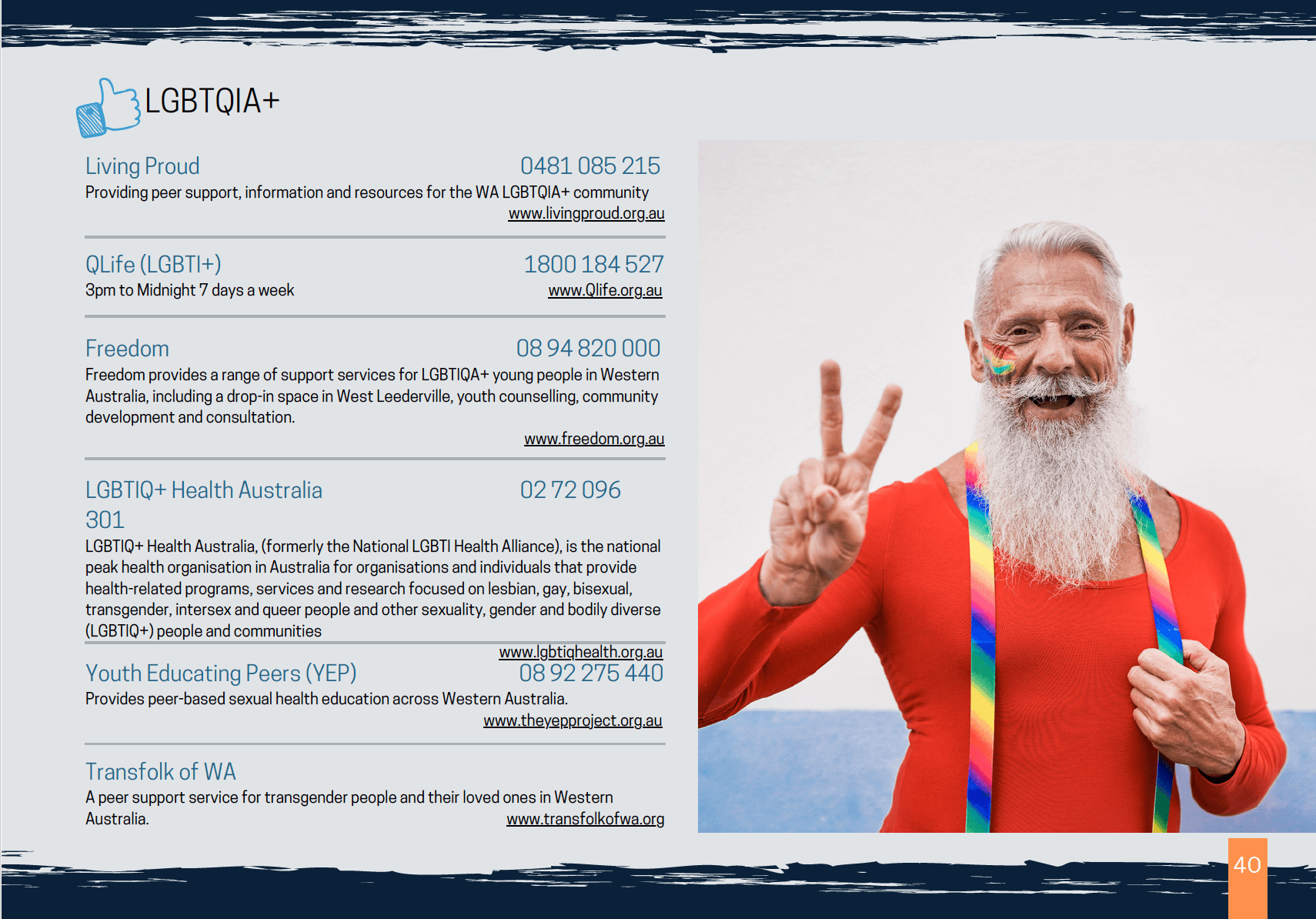
There is a page of contacts listing specific Aboriginal & Torres Strait Islander services, one for Culturally & Linguistically Diverse (CALD) men, LGBTQIA+, People with Disabilities, Youth and Older Men.
The book openly champions the power of social connection and underlines the importance of joining a men’s group, with links to key organisations facilitating connection, such as The Men’s Table, Men’s Sheds WA and The Fathering Project.
Download a copy of The Blokes’ Book here.