
Ivan Frkovic: Turning Data into Prevention
Queensland Mental Health Commissioner Ivan Frkovic used his address at the National Men’s Health Gathering to outline how data-driven policy, early intervention and collaboration are shaping a more proactive mental health system in the state.
As head of a statutory independent body, Frkovic said the Commission’s unique position — entrusted with setting government policy direction — has allowed it to influence major areas such as alcohol and drug prevention, suicide prevention, and community resilience.
“We were able to get the Government to commit to a 10-year plan in three-year phases,” he said. “We’ve got to continue this, based on the evidence.”
Frkovic described the challenge of transforming a “crisis-driven” system into one focused on early intervention. Every interaction, he said, should be seen as an opportunity to intervene.
“I don’t have to be a psychiatrist to have a conversation with someone about their distress,” he told delegates. “There’s a fear about starting a conversation — what am I going to do about that? Whenever anyone turns up in distress, it’s an opportunity to intervene.”
Now entering phase two of its 10-year plan, the Commission is focusing on high-risk groups and capitalising on Queensland’s record $2 billion investment into mental health, drug and alcohol services, and suicide prevention. The scale of the investment, Frkovic said, must lead to change, not repetition.
“If we invest this money to do more of the same, how can we have a different outcome?” he asked. “The challenges are huge, even though we have that investment.”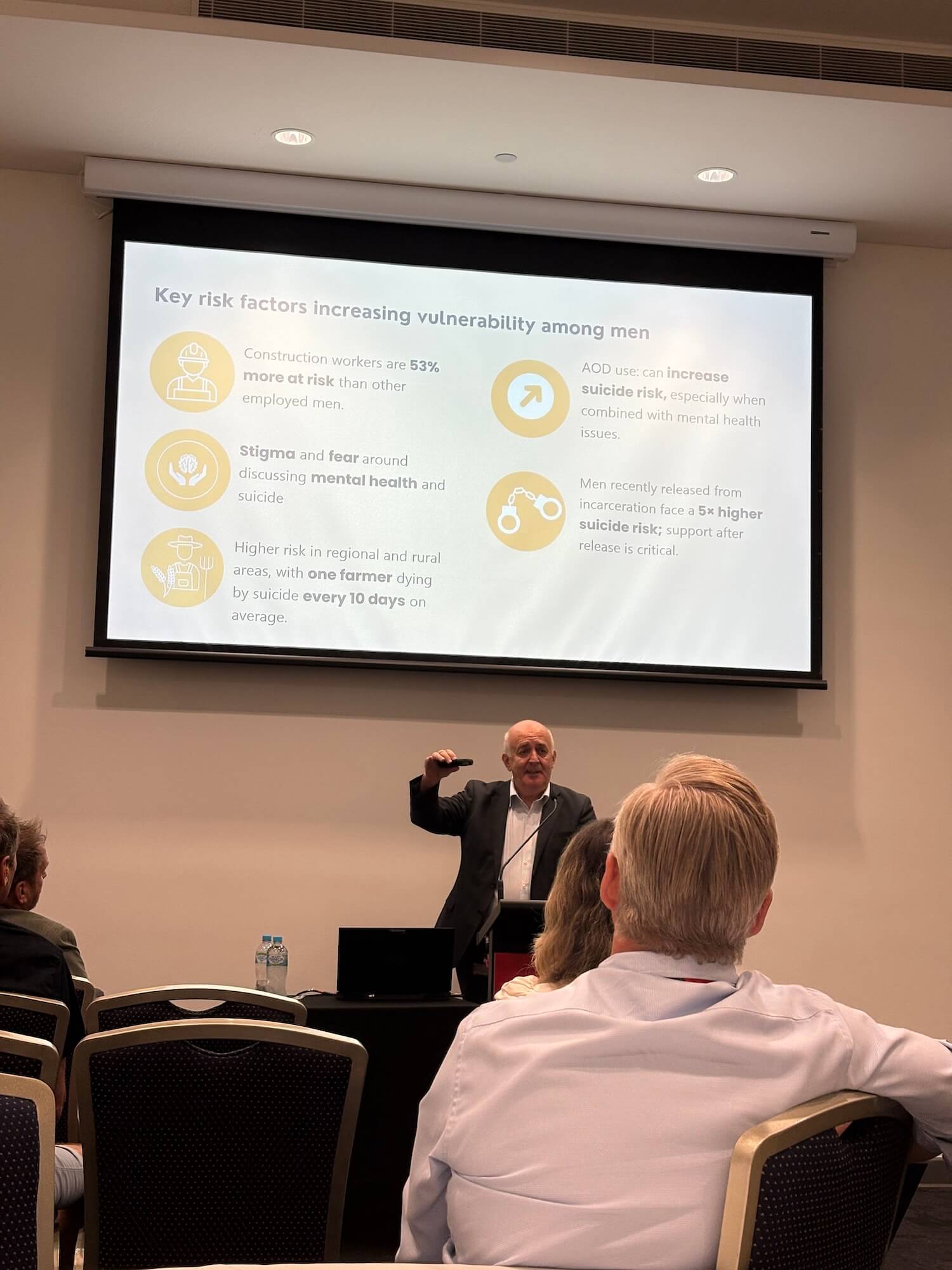
Ivan Frkovic at the National Men's Health Gathering on 23 October, Brisbane.
He shared the latest Queensland suicide data showing 769 suspected suicides in 2024, down from 816 in 2023, with 78% of deaths among men. The trend, while still confronting, suggests that targeted prevention efforts are starting to have an impact.
Frkovic noted that men aged 35 to 45 remain at the greatest risk, and older men in rural and remote areas face suicide rates eight times higher than average. One farmer died by suicide every 10 days on average. Other vulnerable groups include First Nations men (3.7 times higher), and men recently released from incarceration (five times higher).
He also challenged the common perception that men don’t seek help. Half of the men who died by suicide had seen a GP prior to their deaths, suggesting that help-seeking is not absent.
“Most men do ask for help — it’s about where they ask for help,” he said. “Men do talk about their stress in various contexts.”
Frkovic highlighted several initiatives contributing to better outcomes: Men’s Tables, First Nations Aftercare pilots, partnerships with Queensland Corrective Services, and research with Griffith University on suicide drivers in the construction sector.
The Queensland Mental Health Commission will continue to ground policy in evidence and maintain monthly data sets. “We hold the data, we use it to implement our policy,” Frkovic said.