10 social factors driving male suicide
The theme for World Suicide Prevention Day on 10th September 2025 is “Changing the Narrative on Suicide”. This year, the Australian Men’s Health Forum is calling for a change in the narrative around male suicide, acknowledging that men’s elevated risk of suicide is linked to a range of social and economic issues.
If we want to reduce the rate of male suicide in Australia, then addressing the underlying social factors that increase men’s risk of suicide, needs to be part of the solution.
Here we give 10 examples of the social factors that drive male suicide.
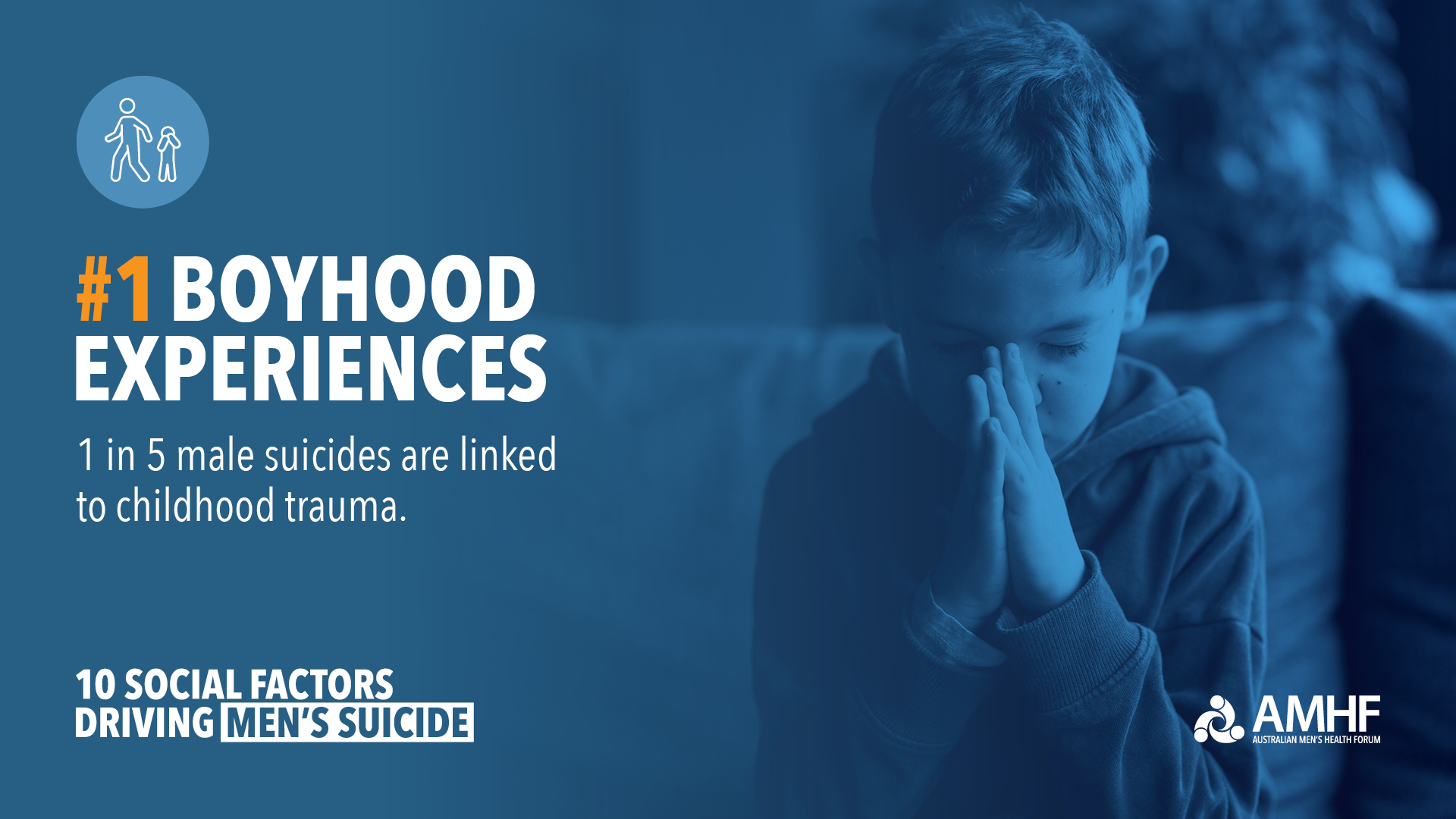
1. Boyhood Experiences
The way we raise boys has an influence on their risk of suicide in later life.
Childhood trauma contributes to 1 in 5 male suicides in Australia, with men making up 70% of suicides linked to childhood neglect and abuse.
Men who experienced maltreatment as a boy are 3x more likely to experience a major depressive disorder than men who didn’t.
Preventing male suicide means taking action to protect boys from childhood maltreatment.
Sources: AIHW Burden of Disease Study (2023); The Australian Child Maltreatment Study (2023)
2. Boys’ Education
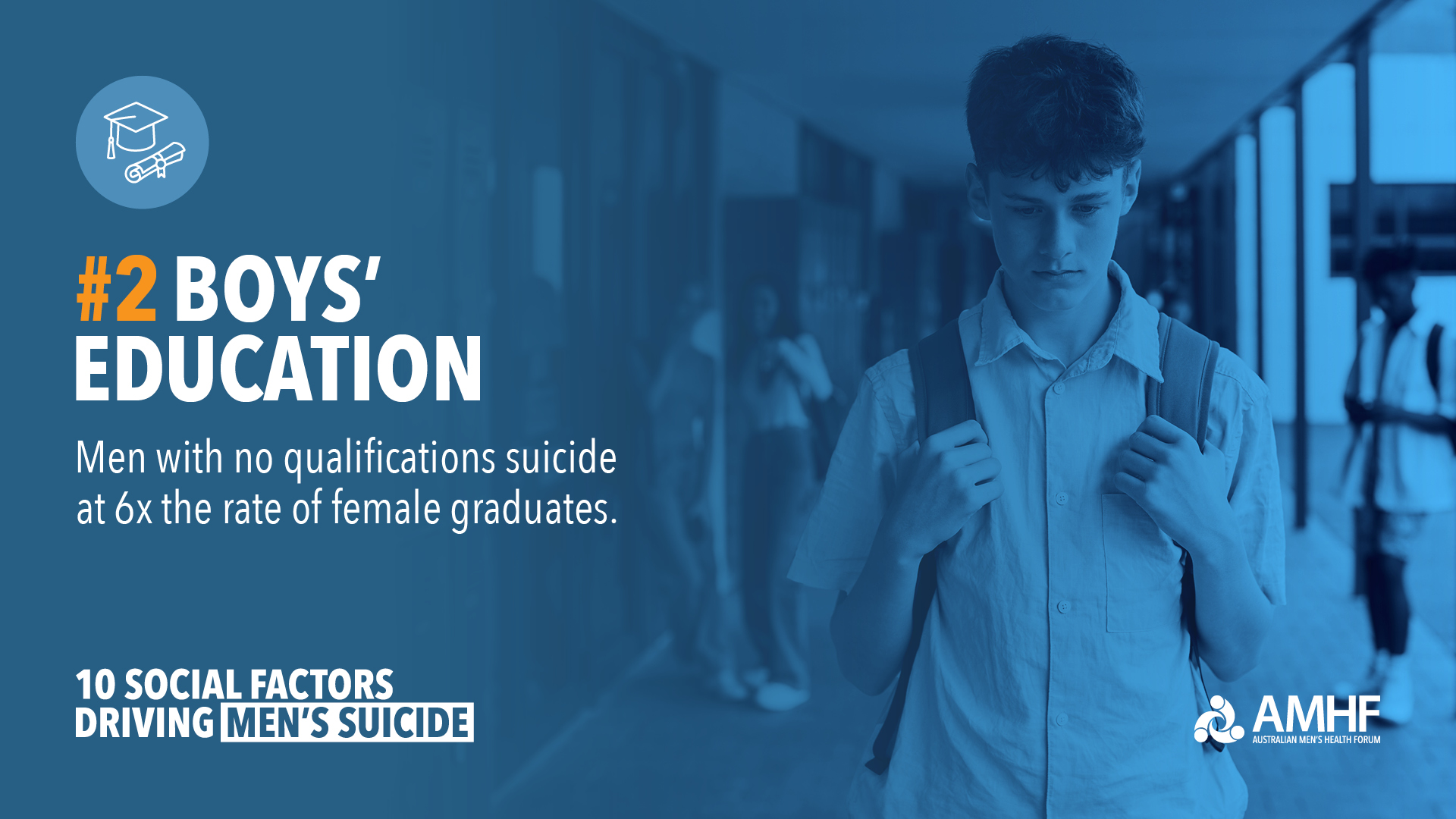
The quality of education boys receive, shapes their risk of suicide in later life. Men aged 25-54 with no post-school qualifications have a rate of suicide that is:
- 2.6x higher than men with a university education
- 3.5x higher than women with no post-school qualifications
- Nearly 6x higher than women with a university education
Young men aged 20-24 are nearly twice as likely as young women to have no qualifications at year 12 or certificate III or above. Women are nearly 25% more likely to have a bachelor’s degree or above (and 50% more likely under the age of 25).
Taking action to improve boys’ educational outcomes is a part of male suicide prevention.
Sources: AIHW Education and employment as risk factors for suicide v10.0 (2025);
ABS Education and Work Australia (2024)
3. Priority Populations
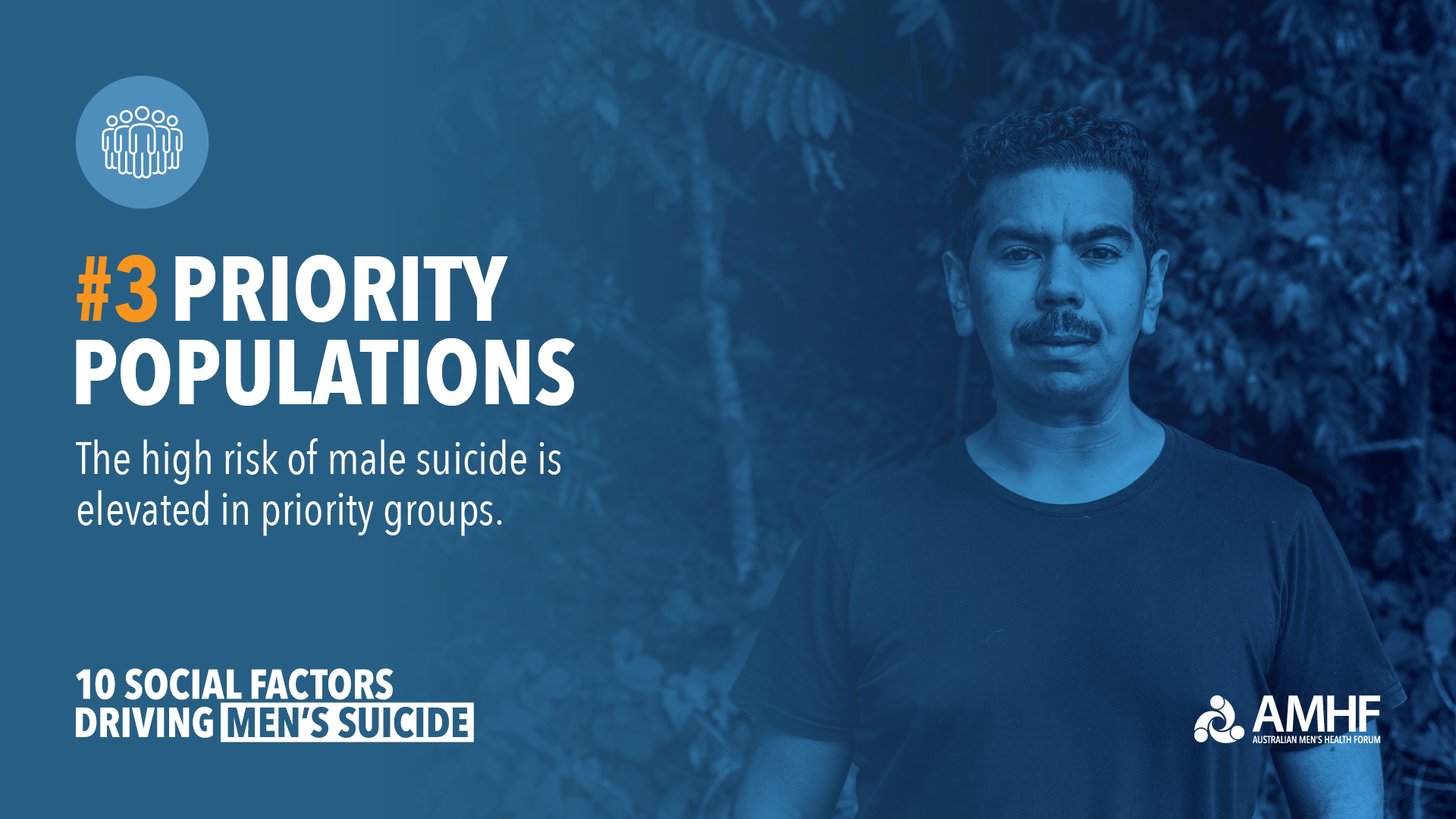
The elevated risk of male suicide is experienced by groups of men and boys in all their diversity. For example, rates of suicide are:
- 1.8x higher for Aboriginal and Torres Strait Islander males
- 2x males in remote Australia compared to major cities
- Between 2x and 4x higher for men on Disability Support Pensions
Other populations of men who may need tailored interventions include male Veterans, Culturally and Linguistically Diverse men and males who identify as LGBTIQ+.
Addressing the needs of priority populations of men is a key part of tackling male suicide.
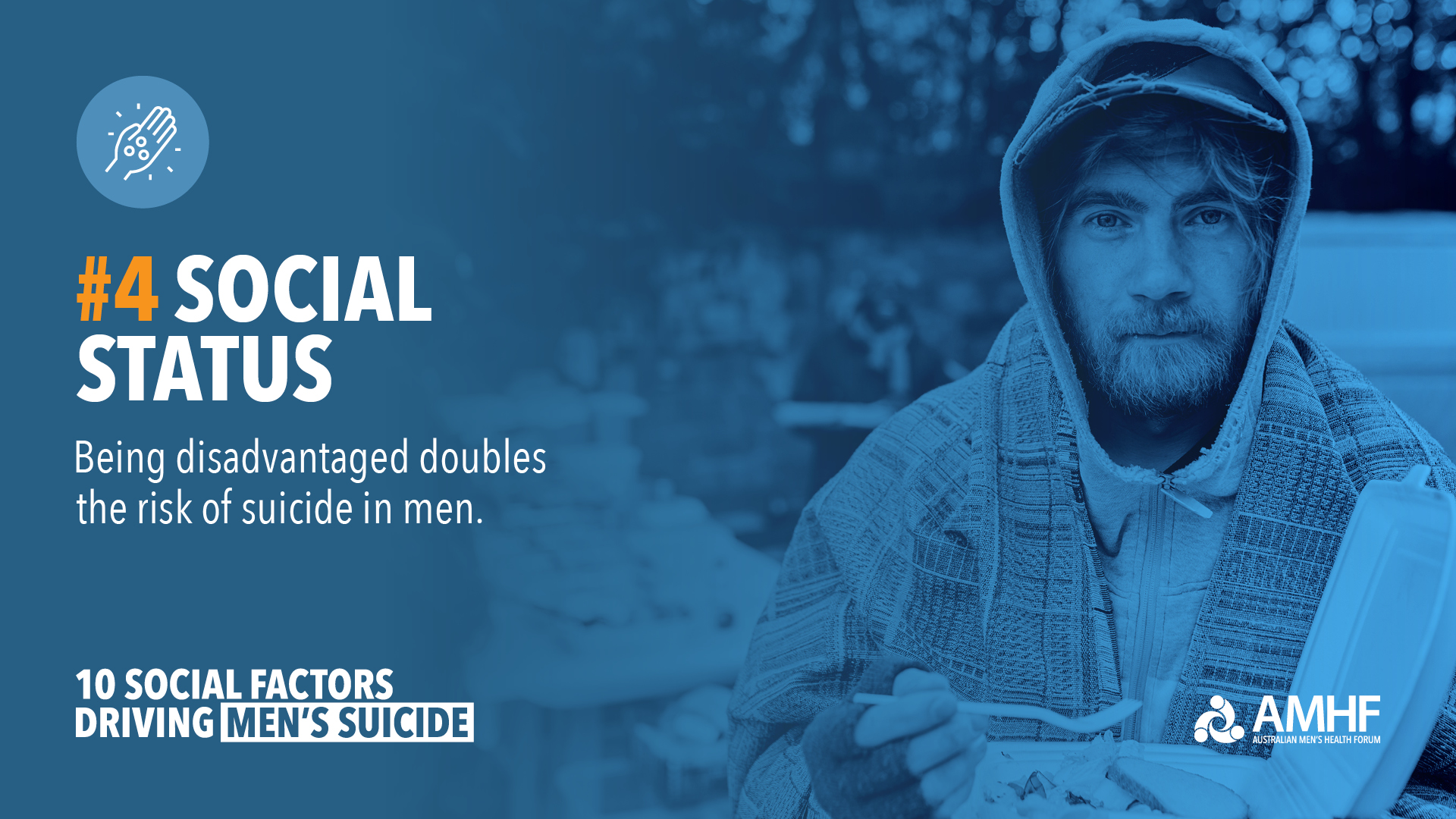
4. Social Status
The risk of suicide is linked to social disadvantage with rates generally falling as socioeconomic status rises.
The impact of social disadvantage on suicide risk is more pronounced in men than women. When comparing the poorest 20% of Australians with the wealthiest 20%, the number of suicides is:
- 27% higher for the most disadvantaged women
- 83% higher for the most disadvantaged men
Men also account for 80% of all suicides linked to economic and housing problems.
Tackling the social disadvantage experienced by men and boys can help prevent male suicide.
Source: AIHW Mortality over regions and time books (2025)
5. Criminal Justice System
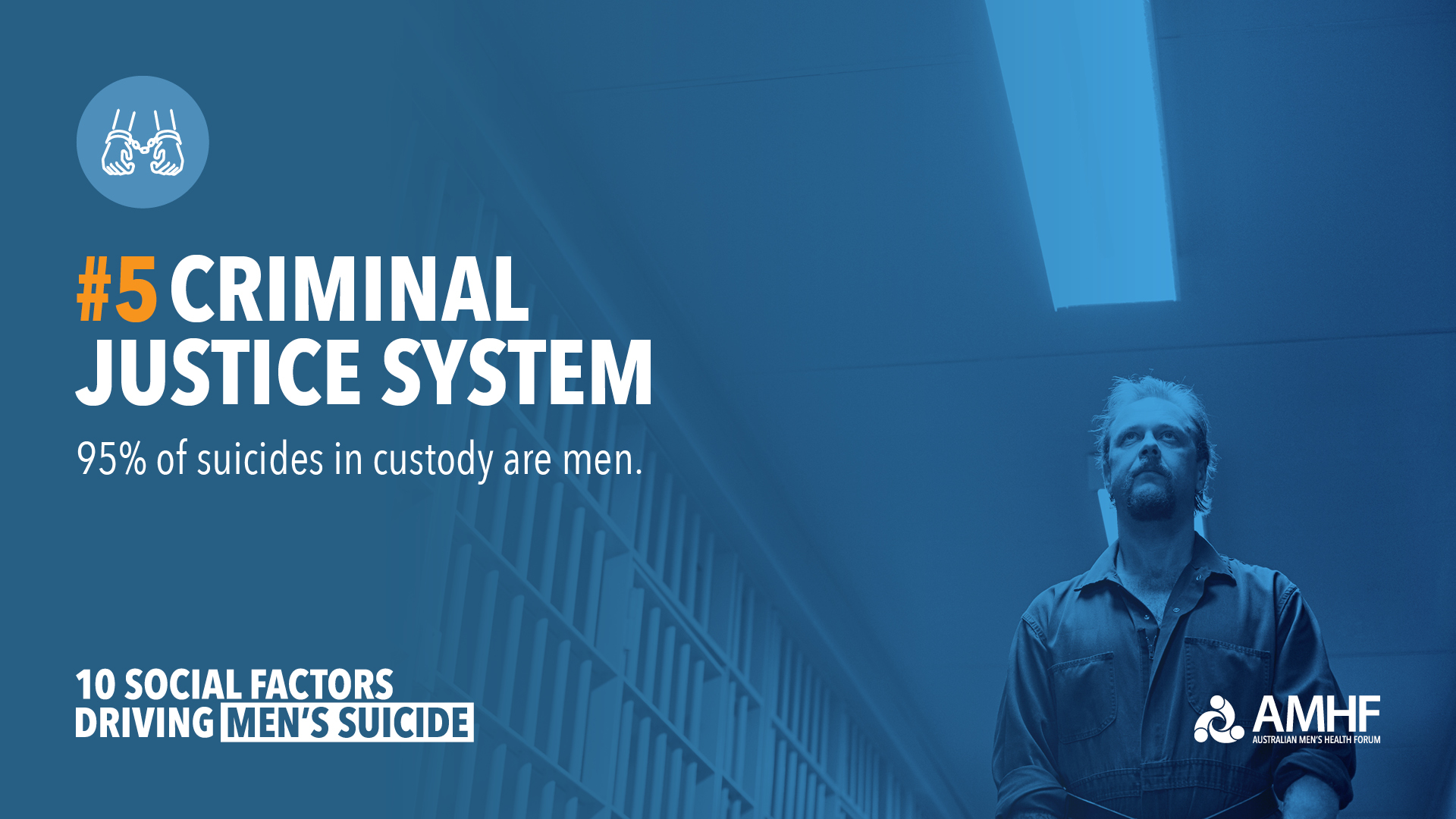
Men are 3x more likely than women to have contact with the Criminal Justice System, 4x more likely to be serving a community-based corrections order and nearly 12x more likely to be in prison.
95% of suicides in custody are male and people leaving prisons are estimated to be at 7x higher risk of suicide than the general population.
3 in 4 children and young people in contact with the youth justice system are male. These boys and young men are nearly 4x more likely to die by suicide before the age of 25 than the general population.
Reducing men and boys’ risk of becoming involved in crime from an early age is a key part of male suicide prevention.
6. Men’s Working Lives
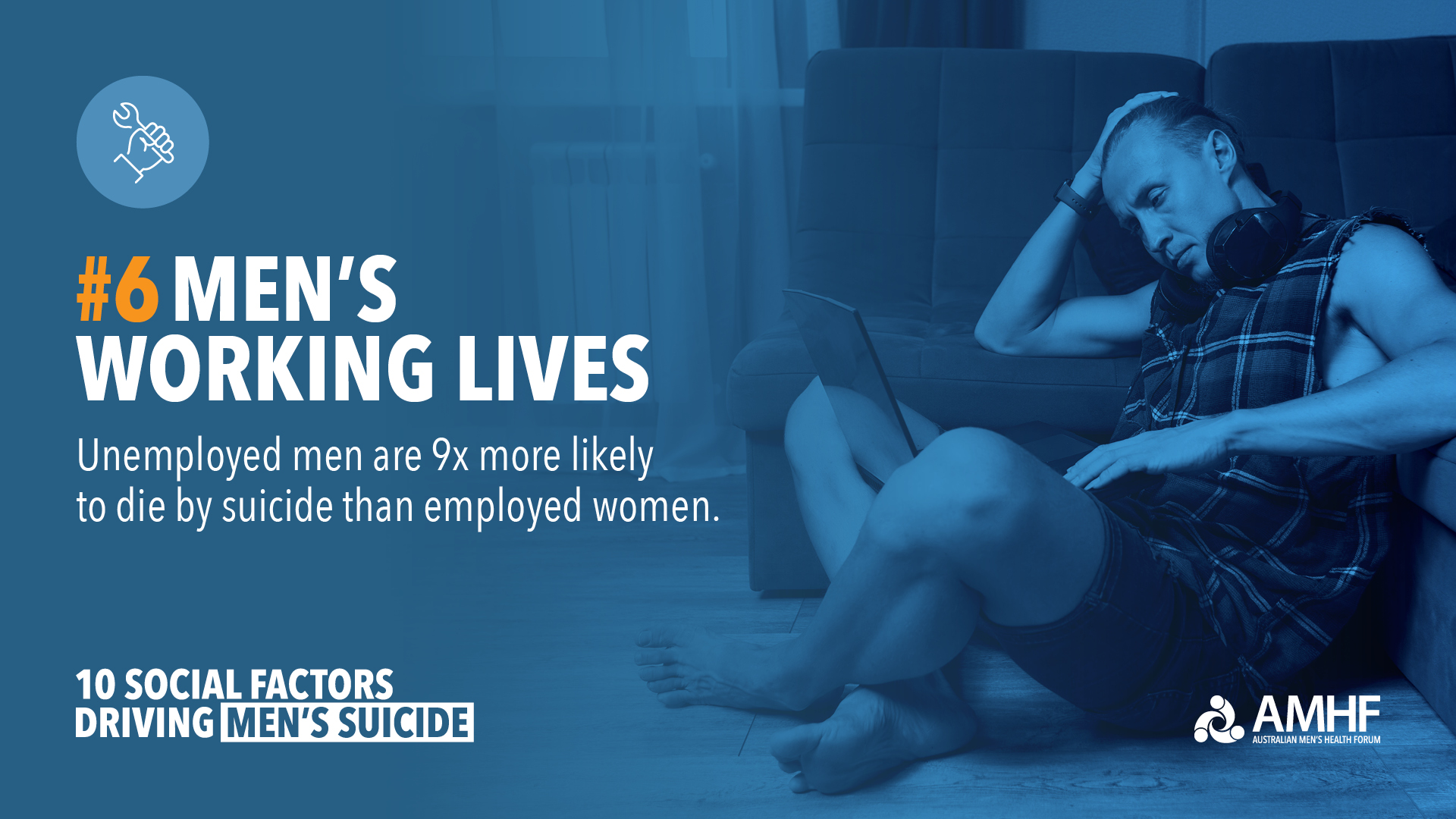
Men are more likely to work in male-dominated industries where the suicide rate is nearly 3x higher than men in gender neutral occupations and 5x higher than women in gender neutral jobs.
Unemployed men have a higher risk of suicide than employed men (2.5x), unemployed women (3.4x) and employed women (9.2x).
Men not in the labour force have a higher risk of suicide than employed men (3.2x), women not in the labour force (4.4x) and employed women (11.7x).
Supporting men to find good work in healthy workplaces is part of male suicide prevention.
Sources: Allison Milner, Tania King, Men’s work, women’s work and suicide (2019); ABS Education and Work Australia (2024)
7. Relationships
Good relationships with our family, friends and intimate partners can protect us against suicide.
Men are nearly twice as likely as women to say they have no family or friends to confide in and one in six men are socially isolated.
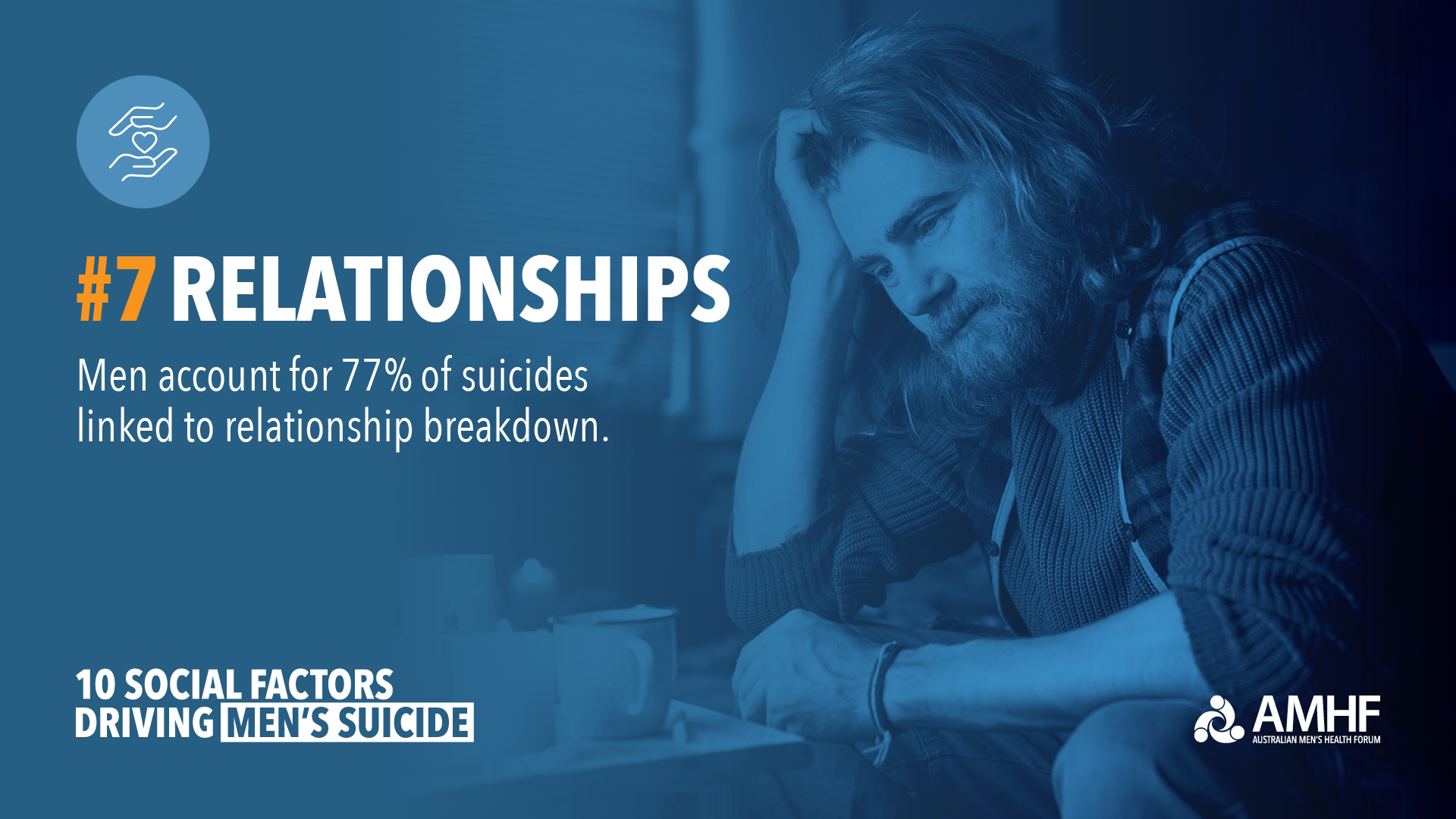
In terms of relationship status, separated men are nearly five times more likely to die by suicide than married men.
Men also account for 77% of suicides where relationship separation or divorce are a contributing factor.
Taking action to build men’s social connections, strengthen relationships and support men through separation can help prevent male suicide.
Sources: ABS General Social Survey (2021); AIHW Social isolation and loneliness (2024); Wilson et al, Suicidality in Men Following Relationship Breakdown (2025); AIHW Psychosocial risk factors and deaths by suicide v23.0 (2025)
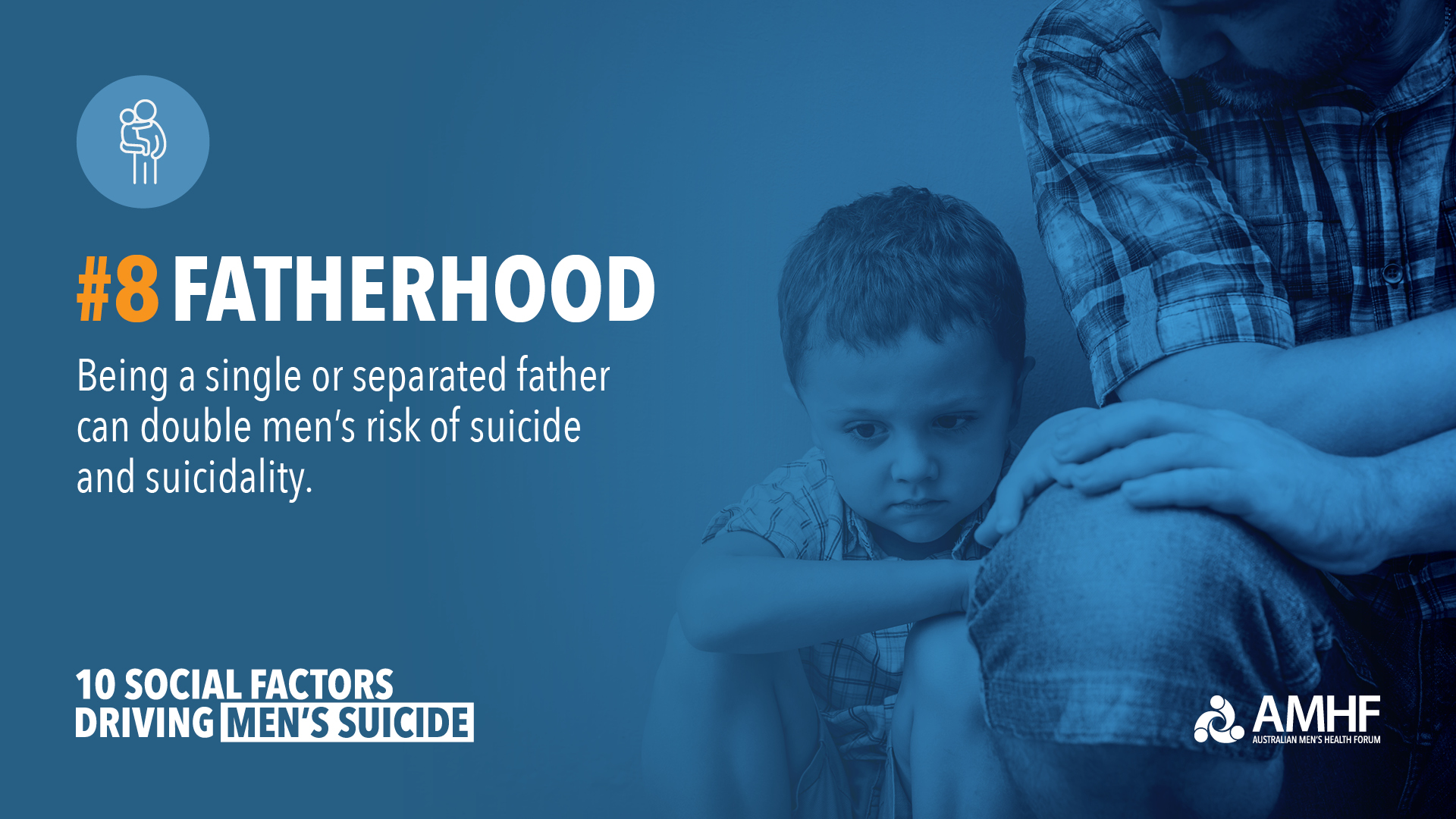
8. Fatherhood
While being in a stable family relationship is generally a protective factor for men, there are suicide risks associated with being a dad.
New dads are twice as likely to experience depression as men in general. Being a single or separated father can double the risk of suicide and suicidality.
Involved fathers can also be a protective factor for boys. For example, boys raised in one-parent families are 3x more likely to have a mental disorder than those living with both their biological parents.
Providing better support for dads at all stages of their journey through fatherhood is a key part of suicide prevention.
9. The System
In 2020, the PM’s National Suicide Prevention Advisor said, “The disproportionate impact of suicide on males, must be called out as a priority for whole-of-government attention”.
Five years later, male suicide is still not a national priority and the latest National Suicide Strategy places little focus on male suicide, with only 3 out of 117 recommended actions specifically focusing on men.
More broadly, there are a range of mechanisms in place at Federal, State and Territory level to tackle the social issues that women and girls face, with no parallel mechanisms in place to tackle men and boys’ issues.
The problem of male suicide arises within a system of policy, funding, programs and services that overlook the health and social issues facing men and boys. Taking systemic action to address these issues is a key part of male suicide prevention.
Source: AMHF Time to Act on Male Suicide (2025)
10. Support Services
Research consistently finds that up to 9 in 10 men who die by suicide have been in contact with frontline services prior to their death.
Research also finds that men who seek help are not always getting the help they need.
While 3 in 4 suicides are men, most suicide prevention services are more effective at reaching women at risk of suicide.
We need to improve the way existing services engage with men and fund grassroots and peer-led services. Directing funding to projects that specifically support men and boys is a key part of suicide prevention.
Source: AMHF Time to Act on Male Suicide (2025)
Learn more about World Suicide Prevention Day via Suicide Prevention Australia